01
Choose and send
A guardian selects a photo from this device or the Dropbox Chooser, adds an optional question, and chooses the child who can see it.
Start with a family photo. Let your child tell its story, then write it on paper. Anecdote keeps their words and original handwritten marks, so you can see how they change as your child grows.
A photo, paper, and a pencil are enough. Save unfinished pages and come back whenever your child is ready.
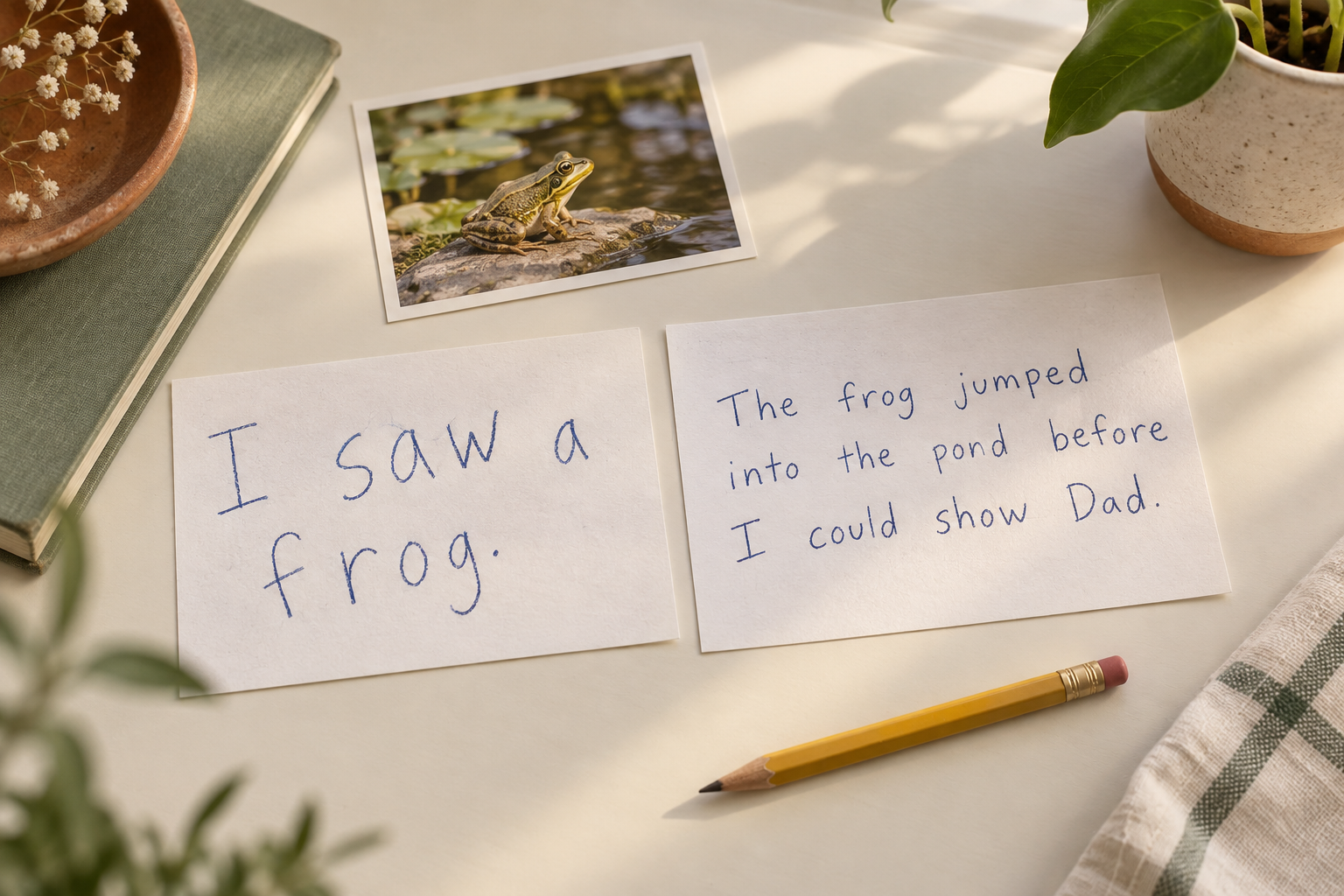
One memory. Two moments in growing up.
Keep the first page and the next one. Compare the marks, the words, and the story.
AI-generated illustrative example · fictional handwriting
A small ritual
A guardian selects a photo from this device or the Dropbox Chooser, adds an optional question, and chooses the child who can see it.
Say the story aloud or type it, then choose a sentence to write. Grammar suggestions are optional. Their own wording matters.
Give handwriting its own moment. Use ordinary paper or print a plain or ruled sheet, then photograph the page and choose the crop.
Review the original crop and print copy together. A guardian approves the page, and it joins the family’s handwriting history.
Growing up in their own handwriting
A wobbly letter, an unexpected spelling, a longer story a year later. Keep each page, return to the same photograph, and compare your child’s handwriting across different moments.
Every finished story includes handwriting. A sentence is enough to start, and unfinished work can wait for another day.
Speaking, grammar help, and handwriting recognition are optional. Keep the original wording and spelling, even when a helper suggests something different.
Children see only photos sent to their profile, while guardian controls stay behind an adult check.
Compare dated pages, revisit a memory, and print one story per page. Reading and downloads stay available after cancellation.
Anecdote FYI does not connect to or browse your Dropbox account. The provider sends only the files you explicitly select in its Chooser.
Crop the handwriting photograph before saving. We keep that metadata-free crop with a separate print copy, and you can download both in ordinary image files. Audio is never saved.
A selected photo is available only to guardians and the child profiles the guardian chose for that prompt.